A pot for native bees
5 kinds of native bee recorded on this one yellow flower.
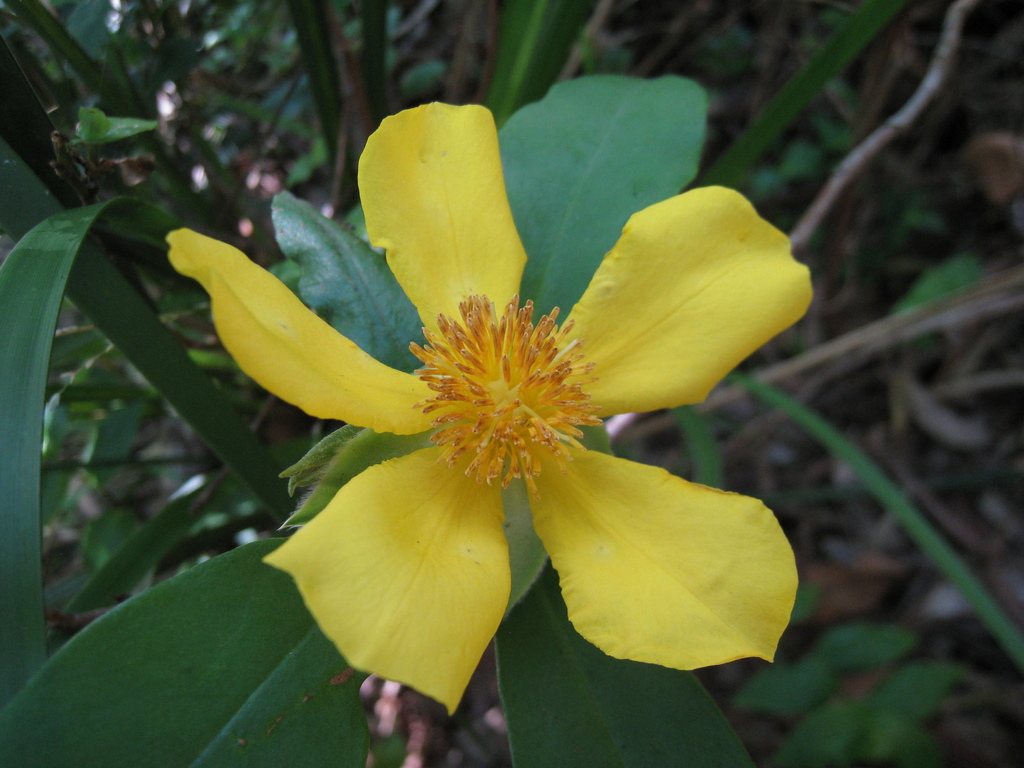
Climbing Guinea Flower has big, buttercup-yellow flowers, most of the year. Wildlife records list five kinds of native bee on it, from tiny stingless bees to the Teddy Bear Bee. In a big pot with a small trellis, it brings them to your step.
Climbing Guinea Flower Hibbertia scandens
- Flowers
- most of the year
- Grows in
- Sun to part shade, a big pot with a trellis unverified
- Local to
- New South Wales, Queensland
Pot it up this weekend unverified
- Pick a big pot: at least 40 cm across, with drainage holes, and a native potting mix.
- Add a small trellis or an obelisk about a metre tall, and tie the first stems to it. Or let it trail over the edge of the pot.
- Find the sun: at least half a day of direct sun for the most flowers.
- Water when the top few centimetres of mix are dry. Don't leave the pot standing in water.
- Trim long runners after a flush of flowers to keep it bushy and pot-sized.
Watch for blue-banded bees
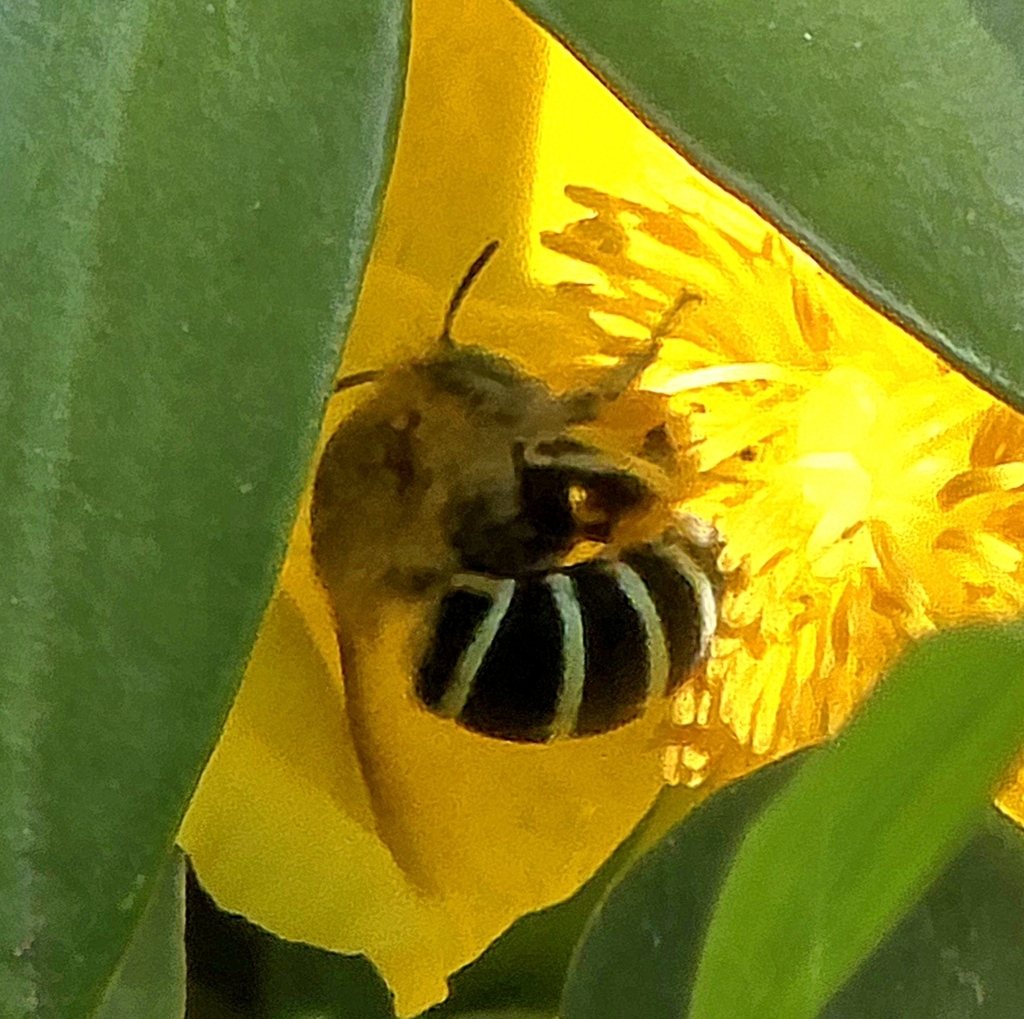
They grab the flower and vibrate to shake out the pollen ("buzz pollination"). Our blue-banded bee research found two records of South-East Queensland blue-banded bees on Climbing Guinea Flower.
Buzz
A blue-banded bee in a Guinea Flower. The flowers hold their pollen tight, and these bees shake it loose. unverified
What you'll see
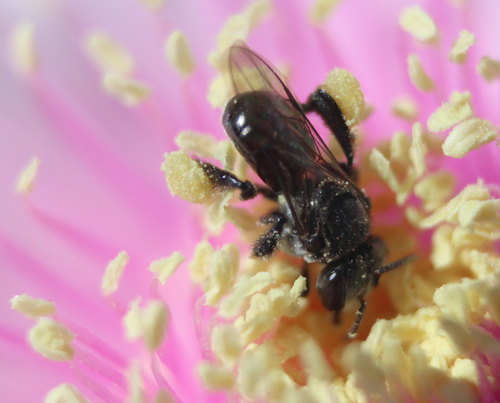 Charcoal Stingless Beevisits the flowersTetragonula carbonaria
- Teddy Bear Beevisits the flowersAmegilla bombiformis
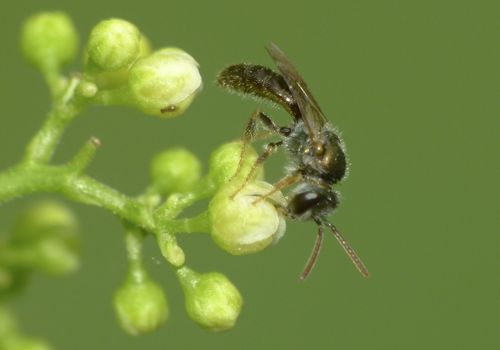 A native furrow bee unverifiedvisits the flowersLasioglossum urbanum
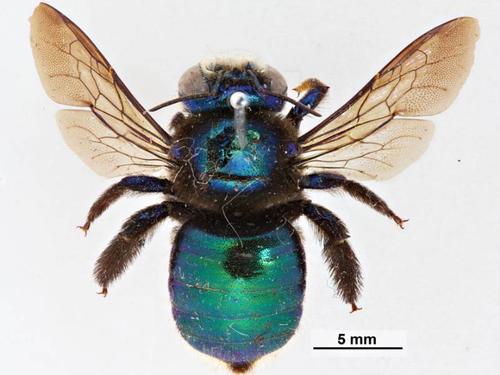 Peacock Carpenter Beerecorded on itXylocopa bombylans
- A native bee unverifiedfeeds at the flowersAustronomia muscosa
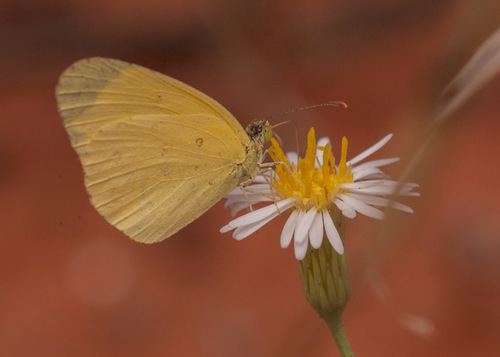 Small Grass-yellowrecorded on itEurema smilax
Wildlife records from GloBI and the Atlas of Living Australia. Everything recorded on Climbing Guinea Flower.
Why Climbing Guinea Flower
It grows wild in Queensland and New South Wales, wildlife records list five kinds of native bee on it, and it is one of the top plants for blue-banded bees in our research for South-East Queensland.
Live outside New South Wales or Queensland?
Climbing Guinea Flower grows wild in those states. Elsewhere, grow a native bee plant that grows wild near you: search your suburb for local bee plants, or search your suburb.
Size, flowering and range: AusTraits and the Australian Plant Census. Lines marked unverified are general gardening advice we have not yet checked against a published source.