Still planting Photinia?
Swap the red hedge for a jewel-beetle hedge.
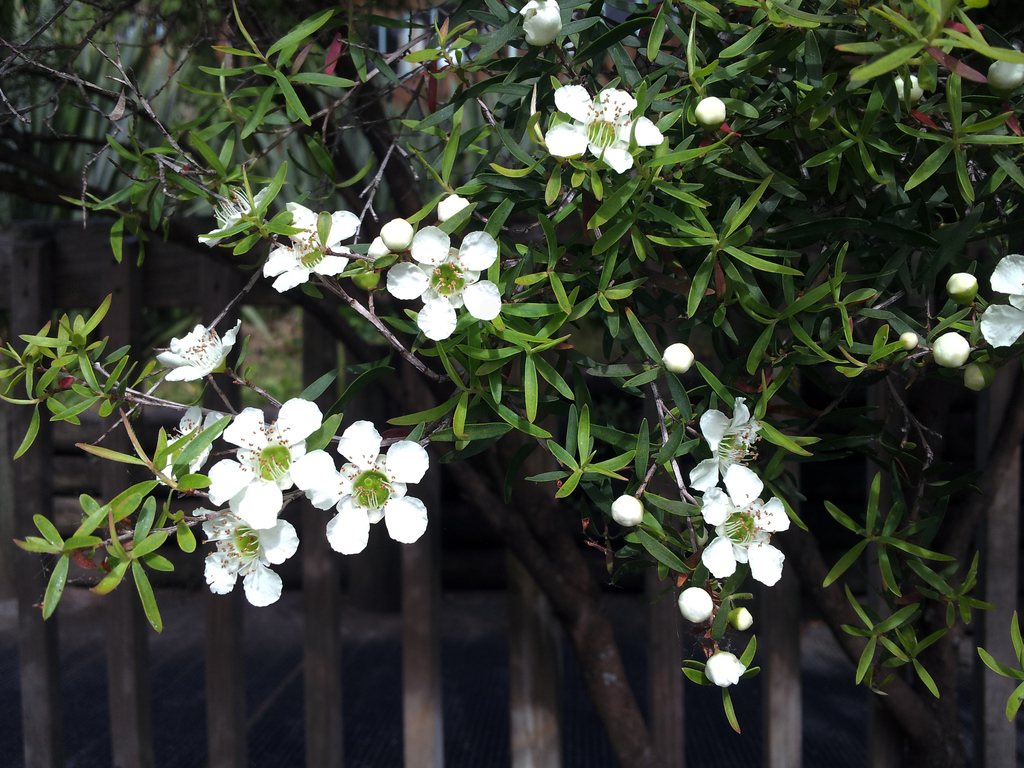
Tea Tree is a fine-leaved native shrub, typically about 2 m tall, that covers itself in small white flowers from November to December. Wildlife records list 33 kinds of animal on it, 13 of them jewel beetles: small, metallic beetles that come for the flowers.
Tea Tree Leptospermum polygalifolium
- Size
- 2 m tall typically (clip lower)
- Flowers
- Nov–Dec
- Grows in
- Sun to part shade unverified
- Local to
- New South Wales, Queensland
Plant a hedge this weekend unverified
- Pick the spot: sun or part shade, in soil that drains. It copes with sandy coastal soil.
- Space the plants about 1 m apart in a row for a screen.
- Plant each one at the same depth it sat in its pot, water well and mulch.
- Water weekly for the first two to three months, then only in long dry spells.
- Clip lightly after flowering each year. Tip-prune young plants to thicken them, and don't cut back into bare old wood.
Taking out Photinia?
Cut it to the ground, then dig out or grind the stump. A local native hedge gives the same screen and also feeds local birds and insects. unverified
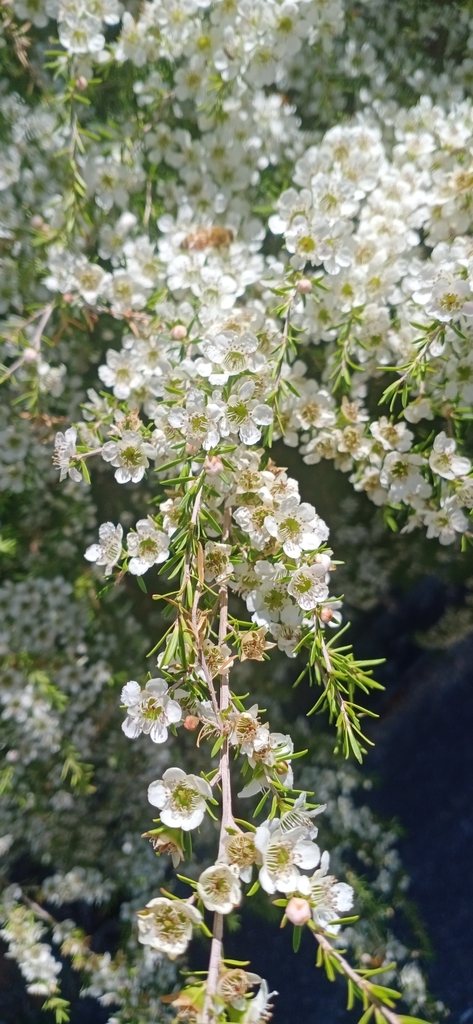
Covered in flowers
In early summer the whole shrub turns white with flowers, and that is when the jewel beetles come. unverified
What you'll see
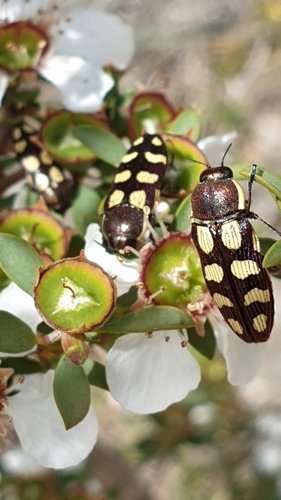 Ten-spot Jewel Beetlefeeds at the flowersCastiarina decemmaculata
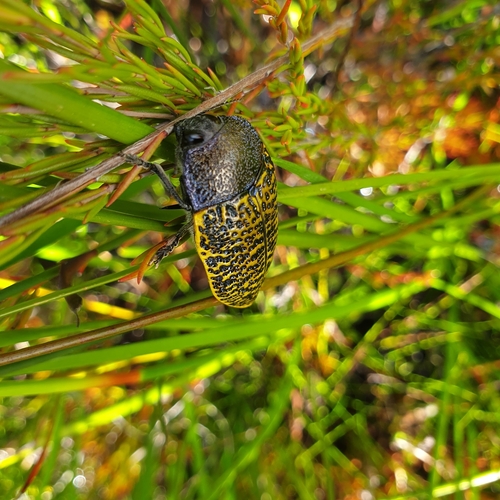 Stigmodera Maculariafeeds on itStigmodera macularia
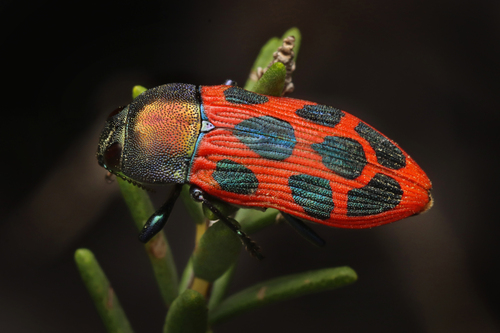 A jewel beetle unverifiedfeeds at the flowersCastiarina octomaculata
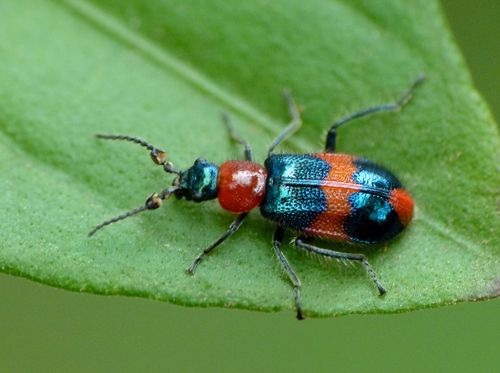 Red and Blue Beetlerecorded on itDicranolaius bellulus
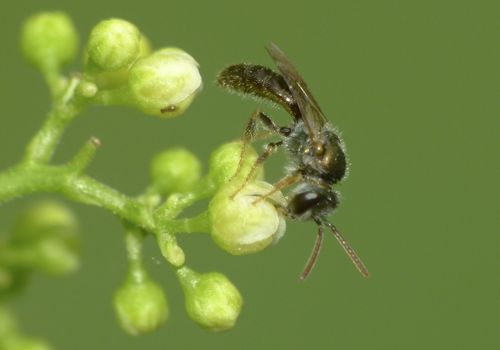 A native furrow bee unverifiedrecorded on itLasioglossum urbanum
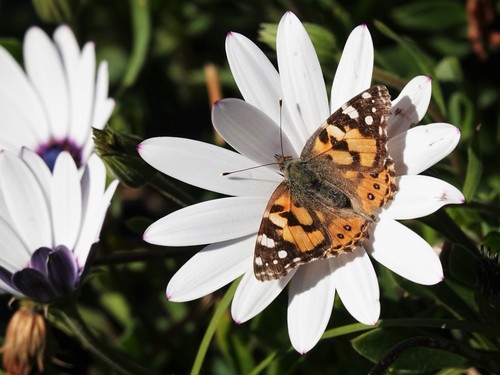 Australian Painted Ladyrecorded on itVanessa kershawi
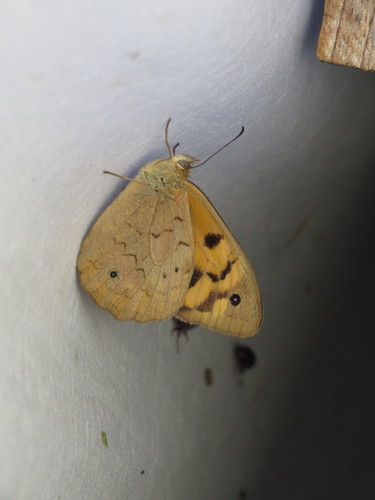 Common Brownvisits the flowersHeteronympha merope
Wildlife records from GloBI and the Atlas of Living Australia. Everything recorded on Tea Tree.
Why swap
Photinia: A local native hedge gives the same screen and also feeds local birds and insects. Tea Tree grows wild in Queensland and New South Wales, and wildlife records list 33 kinds of animal on it: beetles, native bees and butterflies.
Live outside New South Wales or Queensland?
Tea Tree grows wild in those states. Elsewhere, pick a swap that grows wild near you: Photinia swaps for your region, or search your suburb.
Size, flowering and range: AusTraits and the Australian Plant Census. Lines marked unverified are general gardening advice we have not yet checked against a published source.