Old Man Banksia
Banksia serrata
Old Man Banksia (Banksia serrata), also called saw banksia for its saw-edged leaves, is a gnarled tree of Australia's east coast, from southern Queensland to Victoria, with a population in northern Tasmania. It is hardy, copes with salty coastal wind and suits low-maintenance gardens. Its large cream flower spikes feed nectar-eating birds and insects.
- Sun
- Full sun
- Soil
- Sandy, well drained
- Water
- Dry once established
- Size
- Up to 15 m, often smaller
- Flowers
- Cream, Jan–Jun
- Frost
- Tolerates light frost
Based on its natural habitat: little has been published on growing it.
Photo: Bryce Watts-Parker, CC BY, via iNaturalist
- Photo: ian_mcallan, CC BY, via iNaturalist
- Photo: Tom Field, CC BY, via iNaturalist
- Photo: Cowirrie, CC0, via iNaturalist
Growing it
Where to plant
Choose an open, sunny spot with sandy, well-drained soil. Old Man Banksia prefers sand to clay, and in the wild it grows in open forest. It suits windbreaks and screens, and it withstands salty wind, so it is a good choice for coastal gardens.
Frost and feeding
It tolerates light frost. It is sensitive to phosphorus, so use a native fertiliser rather than a standard one.
Propagation
Seed germinates reliably without pretreatment. Low-growing forms are usually raised from cuttings, which can be slow to strike because seedlings often do not keep the low habit.
Fire
The plant has no lignotuber, a woody root base that sends up new shoots. Instead, its thick, rough bark protects it, and it resprouts from shoots under the bark within about a week after fire.
What it looks like
Old Man Banksia is usually a tree, though plants in exposed spots are often lower, stunted and gnarled. The bark is thick and rough. The leaves are 10 to 20 cm long, with saw-toothed edges that give the plant its name.
The flowers form large cylindrical spikes, 7 to 20 cm long and about 10 cm wide, made up of many tiny flowers. They are cream with a grey tinge and appear mostly from January to June.
The seed pods, called follicles, are dry woody capsules that open only after fire.
For wildlife
The large flower spikes attract nectar-feeding birds and insects. Black cockatoos feed on the developing seed cones.
Threatened wildlife that uses it
Caterpillar or larval food plant for
Flowers visited by
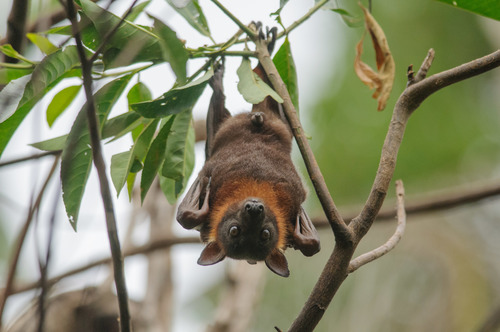
- Grey-headed Flying-foxVulnerable
- Eastern Pygmy-possumunverifiedVulnerable in NSW
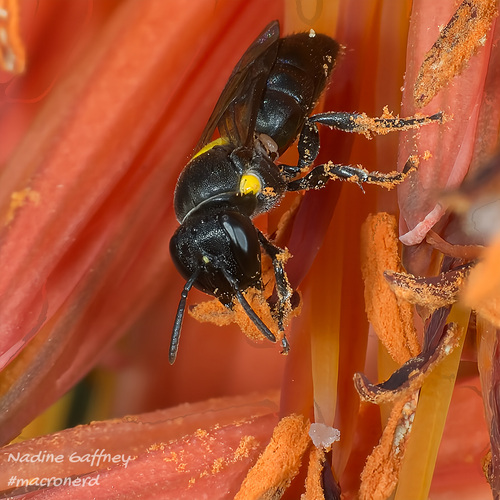 Dark-headed Dimorphic-Masked Bee
- New Holland Honeyeater
- Eastern Spinebill
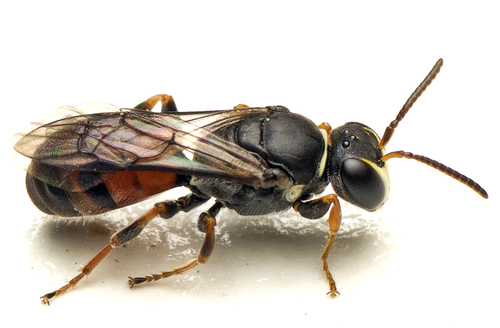 Littler's Masked Bee
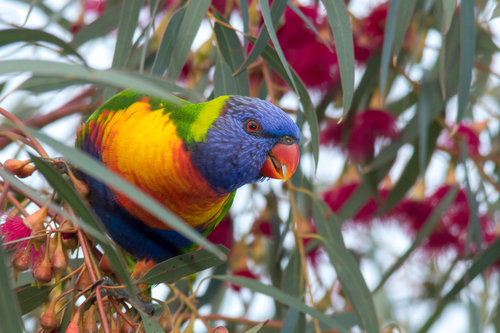 Rainbow Lorikeet
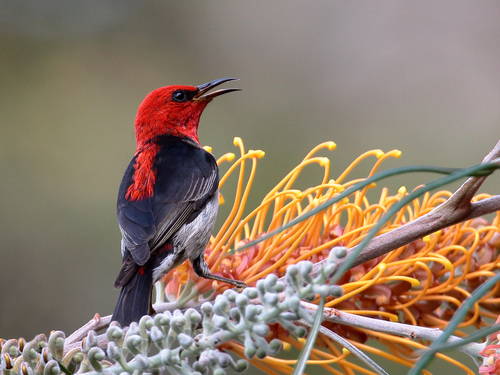 Scarlet Honeyeater
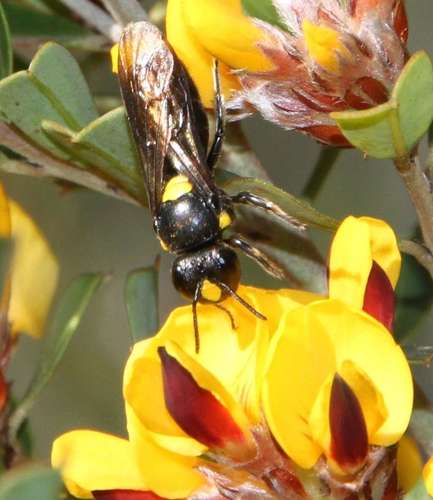 Capricious Dimorphic-Masked Bee
- Red Wattlebirdunverified
Eaten by
- Grey-headed Flying-foxVulnerable
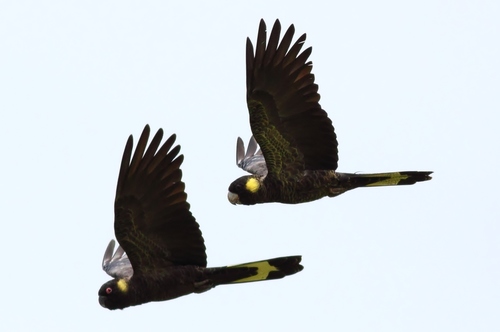 Yellow-tailed Black Cockatoo
- Rainbow Lorikeet
- Dark-headed Dimorphic-Masked Bee
- New Holland Honeyeater
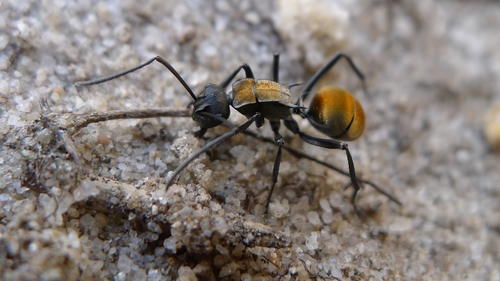
- Anoplognathus multiseriatus
- Eastern Spinebill
- Littler's Masked Bee
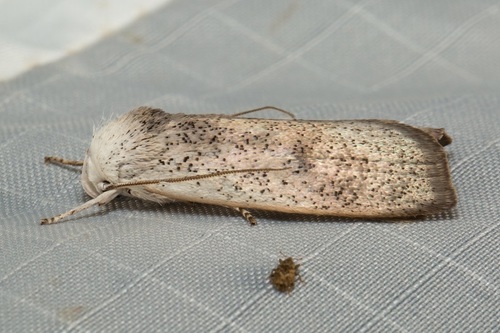 Cryptophasa spilonota
Also recorded with
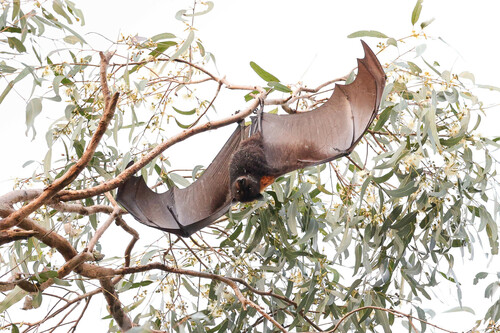
Where it belongs
Native to southern Queensland, New South Wales, Victoria and northern Tasmania. It grows along the coast and in open dry forest and sandstone ranges, mostly on sandy soils, and reaches inland to the Great Dividing Range.
Suburbs it belongs in include:
Related plants
Sources
- Banksia serrata, VicFlora, Royal Botanic Gardens Victoria
- Banksia serrata, Australian Native Plants Society (ANPSA)
- Old man banksia, NSW National Parks and Wildlife Service
- Banksia serrata, Gardening with Angus
- Native range: Australian Plant Census and Alien Flora of Australia. Wildlife links: GloBI and the studies cited on each animal page. All sources